be.boosted — Leadership, Coaching & Community Building
Fellow → Coach → Board Member → Mentor (2021–2024)
I first joined be.boosted as a fellow, selected into an international cohort of highly motivated students focused on leadership, public speaking, negotiation, and group dynamics. The program exposed me to intensive training formats, including a Model United Nations simulation in London, and to a community that continuously challenged me to grow — intellectually, socially, and personally.
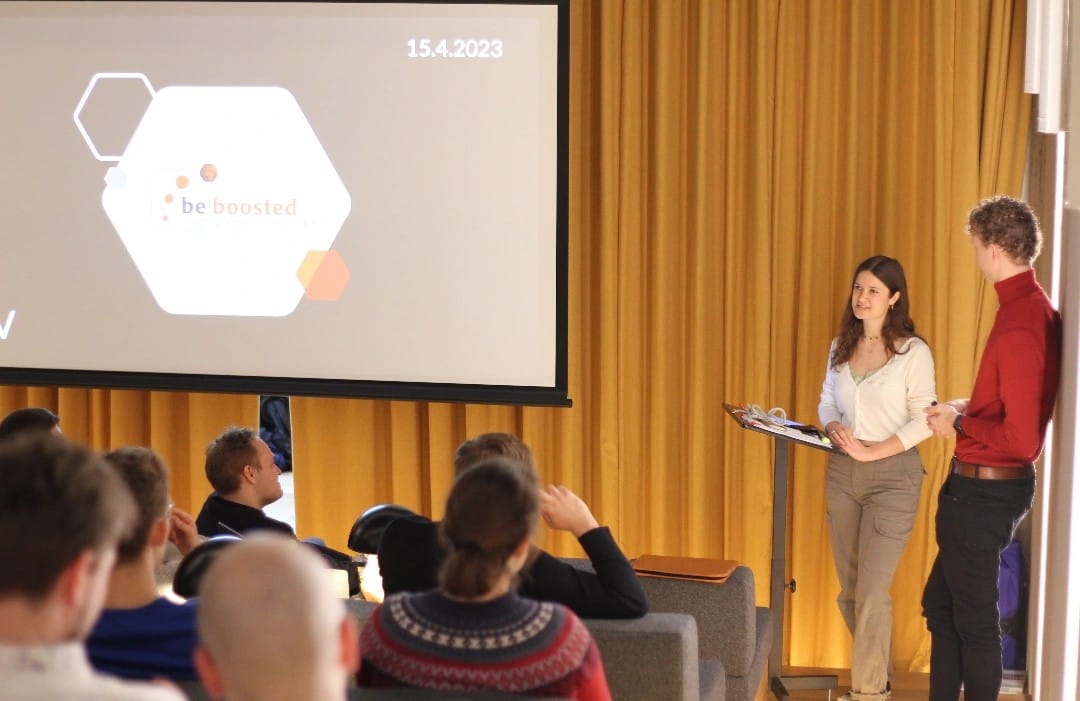
After completing the fellowship, I stayed involved as a volunteer mentor and member of the recruiting team, supporting the next generation of fellows. I was later selected as a coach, which involved designing and delivering a full workshop series together with my co-coaches, mentoring a team of fellows over several months, and leading them through a Model UN simulation. This role required sustained commitment, careful feedback, and adapting leadership styles to very different personalities and group dynamics.
I was subsequently elected to the board during a challenging phase for the organization. Together with the other board members, I treated this as an opportunity to stabilize and reorient BE.BOOSTED. We worked intensively on strategy, internal communication, and structure, introducing clearer interfaces between teams, founding a dedicated DEI team with defined goals and evaluation criteria, strengthening the alumni network, and expanding financial outreach. Much of this work felt like building a small start-up: navigating ambiguity, making decisions with incomplete information, and aligning a group of highly driven individuals around shared values.
Today, I remain involved as a mentor for fellows and trainers. What has stayed most meaningful to me is the opportunity to give back — enabling younger students to grow, experiment, and gain confidence in leadership roles, just as others once did for me.
Leadership Development
Coaching & Mentoring
DEI & Organizational Strategy
Student-run Association
BE.BOOSTED (official)