Computational Neuroscience & Abstract Cognition
DPhil Student · University of Oxford
I study how the brain uses structured internal models to plan, abstract, and generalise across tasks and environments. My research combines computational modelling with human fMRI and intracranial electrophysiological recordings to probe neural representations of planning — how we represent states of the future.
Selected publications
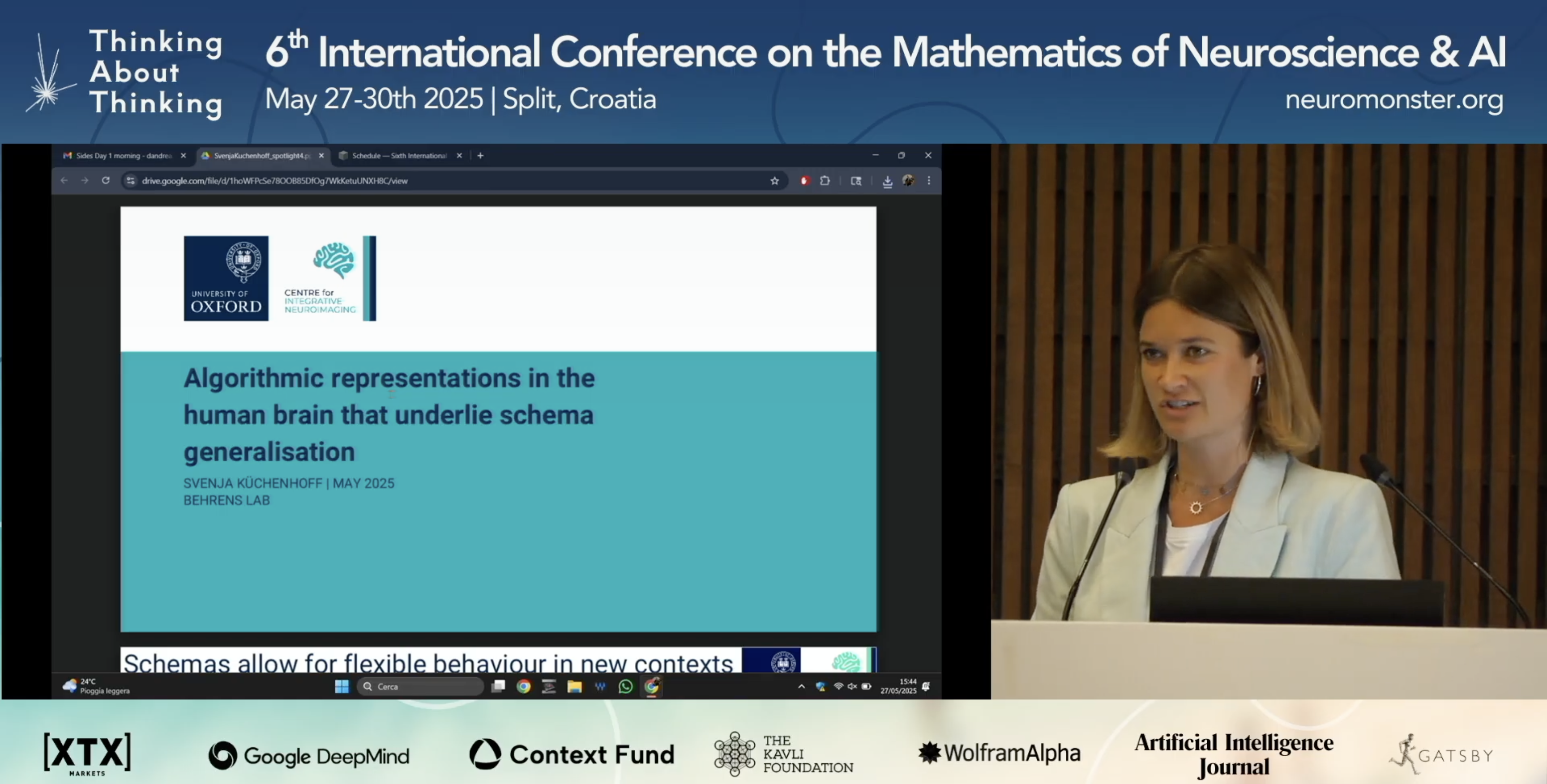
- Küchenhoff, S., Behrens, T.E.J., et al. Algorithmic representations underlying schema generalisation. Talks at CogSci (2025), RLDM (2024). CogSci talk (slides / abstract)
- Küchenhoff, S., Zsido, R.G., Saberi, A., Bernhardt, B., Weiss, S., Eickhoff, S., Sacher, J., Valk, S.L. Sex-bias in cortical and hippocampal microstructure. Nature Communications, 2024. [PDF] [Project]
- Contreras-Huerta, L.S., Pisauro, A., Küchenhoff, S., et al. Reward self-bias in foraging. Scientific Reports, 2024. [PDF]
- Küchenhoff, S., Doerflinger, J., Heinzelmann, N. Genetic technologies questionnaire. BMC Medical Ethics, 2022. [PDF]
- Küchenhoff, S., S., Sorg, C., Schneider, S. C., Kohl, O., Müller, H. J., Napiórkowski, N., ... & Ruiz‐Rizzo, A. L. Visual processing speed is linked to functional connectivity between right frontoparietal and visual networks. European Journal of Neuroscience, 2021. [PDF]
Awards & Fellowships
- Boehringer Ingelheim Fonds — PhD Fellowship
Awarded in recognition of research excellence, as shown by selection following a competitive application process (success rate 8%). - German Academic Scholarship Foundation (Promotionsförderung der Studienstiftung des Deutschen Volkes)
Recipient of fellowship support, reflecting sustained academic achievement and leadership as assessed by the Foundation’s selection panels (55,4% of recipients finish their dissertation "summa cum laude"; selection criteria emphasise giving back to society). - Wilfred Knapp Science Scholarship (St Catherine’s College, Oxford)
Awarded for academic distinction and contributions to college life.
Experiences
-
University of Oxford — DPhil Researcher (2022–present)
I use multivariate analyses and model-based approaches to link human fMRI and iEEG (LFP & spikes) to mechanistic theories of higher cognition inspired by computational models and rodent electrophysiology. I write Python and Matlab analysis pipelines for human neuroimaging and electrophysiology data. I also work on llm-related sideprojects, where I observe llm-interactions from a social psychology lense, or use semnatic embeddings to bridge to neural embeddings of the brain. -
Skippy Ed — Strategic & Scientific Advisor (2025 - present)
Advised on psychometrically sound, engagement-focused questionnaire design for a career-matching app for Indian students, including gamification, bias reduction, and inclusive UX -
Merck KGaA — CEO Office Intern (Strategy) (2020)
Strategic project management support. -
CPC-AG — Intern & Student Consultant (2017–2019), Frankfurt, Germany
Worked on change-management projects, developed immersive business simulations, and led agile & Scrum trainings for client teams.
Teaching
Much of where I am I owe to inspiring mentors. I intend on doing the same by engaging in various teaching roles: I supervised a very talented MSc Neuroscience student (2024), tutored postgraduate students for “Experimental design of fMRI experiments” (2024), and taught undergraduates on Chris Summerfield’s course “How to Build a Brain from Scratch” (University of Oxford, 2024 & 2025). I have served on the board of the student-led organisation be.boosted, where I ran workshops on public speaking and leadership. My most recent major teaching project is TReND-CaMinA, a summer school emphasising accessibility and open science aimed at students across Africa (2025, 2026) — read more here.
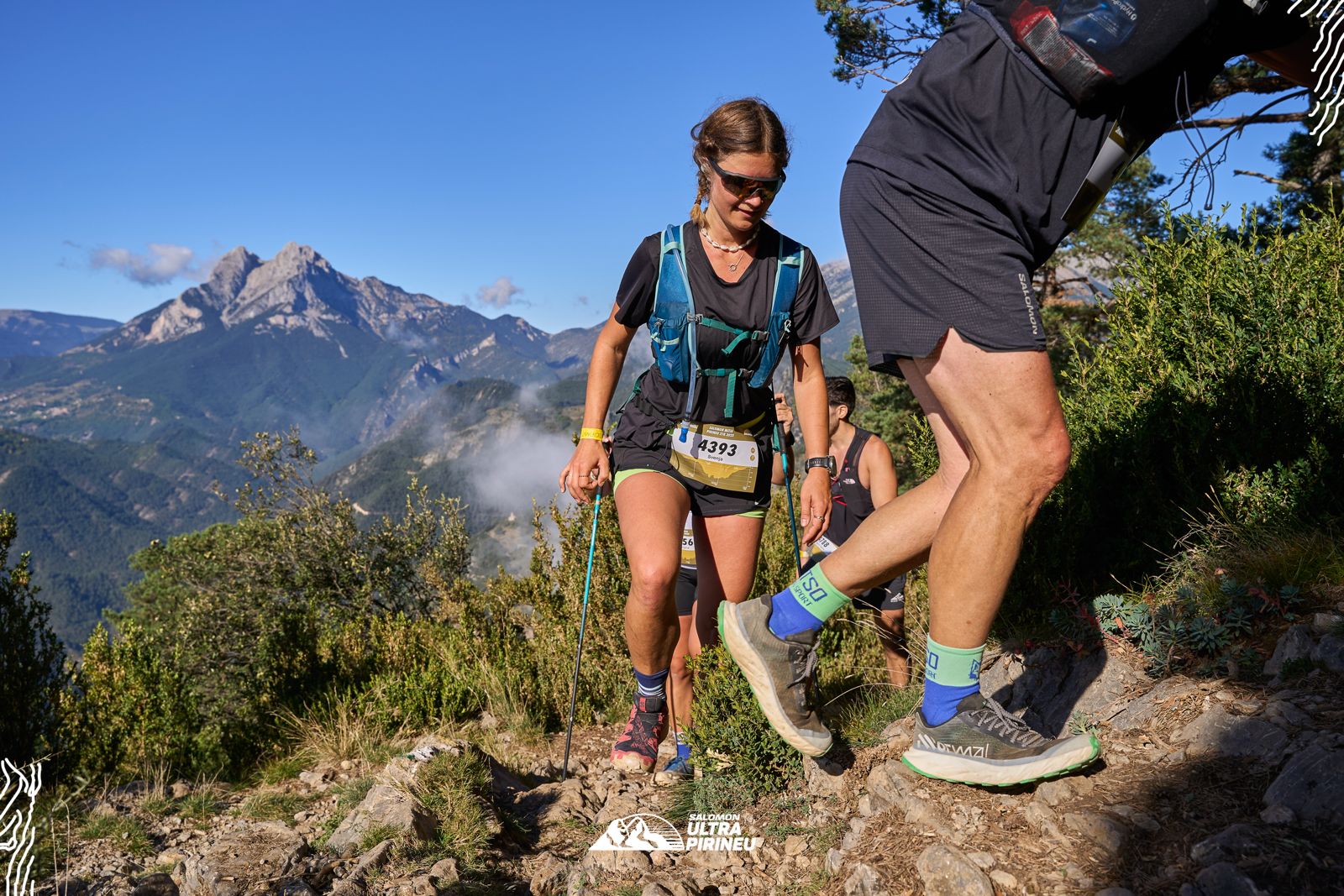
In my free time, I like to be creative and spend time in the outdoors.